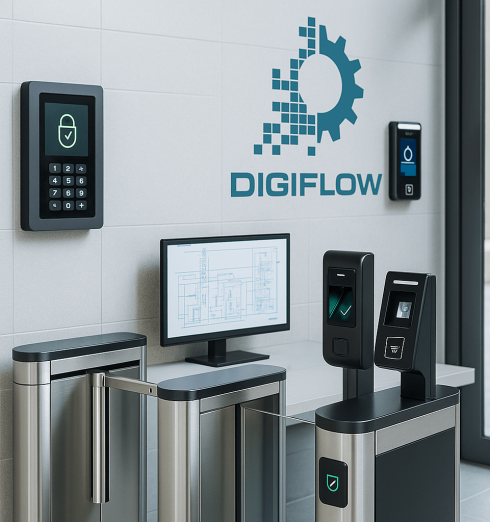
Balancing Security and Usability in Access Control Design
Access Control: It’s Not Just About Doors—It’s About Experience
When planning access control systems, many organizations focus solely on locking things down. But true access control engineering is about striking the right balance between security, operational flow, and user experience.
At DIGIFLOW, we help clients design systems that keep people and assets safe—without slowing down work or frustrating users.
”The best access control system is the one your people don’t think about—because it works seamlessly in the background.“
The Usability Trap
Overly rigid access systems can lead to:
Workflow bottlenecks and inefficiencies
Increased bypass attempts or user error
Resistance from staff and facility managers
On the other hand, overly permissive systems may expose your organization to unnecessary risk.
Our Advisory Approach
Every organization operates differently. That’s why we start with operational mapping: understanding who needs access to what, when, and under what conditions.
From there, we design systems that make security natural, unobtrusive, and reliable, with advisory services covering:
Zoning and access hierarchy design
Integration with HR or time-management systems
Secure but intuitive credentialing methods
Tailored design for staff, visitors, and contractors
Compliance with local and sector-specific regulations
Designed for Real-World Operations
We work across sectors—corporate, industrial, and public—to develop access control systems that match both the environment and its people.
Our recommendations are technology-agnostic and designed to allow competitive procurement. Whether you’re implementing card readers, biometrics, mobile credentials, or physical barriers, we make sure it fits your workflow and goals.
At DIGIFLOW, we believe security and usability can work together. Our advisory services help you implement systems that not only protect—but also empower.
Security Shouldn’t Slow You Down, Why choose us:
Improved safety without operational friction
Reduced support and maintenance issues
Documentation suitable for tendering or implementation